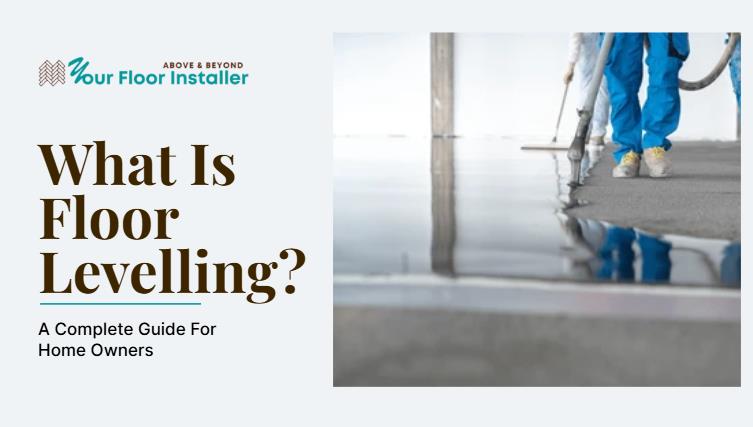
Floor levelling is the process of correcting uneven, sloped, or damaged subfloors to create a flat, stable surface before installing new flooring. It ensures proper adhesion, structural integrity, visual consistency, and long-term performance of flooring systems across residential and commercial spaces.
In this complete floor levelling guide, I’m going to explain everything homeowners need to know, from floor levelling methods, materials, cost of floor levelling , timelines, and mistakes to avoid, to how professional floor levelling protects your investment. As flooring specialists at Your Floor Installer, based in Victoria, we provide professional floor levelling services, delivering precision results for every flooring type.
What Is Floor Levelling?
Floor levelling is the process of preparing an uneven, damaged, or sloped subfloor to achieve a smooth, flat, and structurally sound surface before installing new flooring. It involves using Floor levelling compounds, grinding, or repairs to eliminate dips, cracks, and height variations. Proper floor levelling ensures correct flooring installation, prevents future movement or cracking, enhances durability, improves safety, and delivers a visually flawless finish for homes and commercial spaces.
Why Floor Leveling Is Essential For Homes?
Floor levelling is not optional, it is the foundation of every successful flooring installation. Even minor unevenness in the subfloor can compromise the performance, appearance, and lifespan of your flooring. An uneven floor surface places continuous stress on materials, leading to premature failure, voided warranties, and safety risks.
- Lifting or buckling floorboards
- Gaps between laminate or timber planks
- Cracked tiles or grout lines
- Soft spots underfoot
- Squeaking or movement
- Visible surface imperfections
At Your Floor Installer, we treat floor levelling as a critical structural process, not just a cosmetic fix, ensuring stable, durable, and perfectly finished floors throughout all Victoria suburbs.
What Causes Uneven Floors in Homes?
Uneven floors are extremely common in Victoria homes due to a combination of environmental, structural, and age-related factors. Victoria’s temperature fluctuations and humidity changes contribute to floor movement if levelling is not professionally managed.
Common Causes of Uneven Floors
- Natural foundation settlement
- Expansive soil movement
- Moisture intrusion or leaks
- Poor original construction
- Worn timber joists or bearers
- Cracked or uneven concrete slabs
- Removal of old flooring without preparation
How to Level Floor- Complete Process
Proper floor levelling involves a systematic process to ensure a smooth, stable surface for any flooring type. At Your Floor Installer, we follow these professional steps across Melbourne and Victoria to guarantee perfect results.
1. Assessment
Inspect the Subfloor: Begin by evaluating the existing subfloor. Identify high spots, low spots, cracks, or uneven areas that could affect flooring performance.
Measure Variations: Use a spirit level, laser level, or straightedge to measure deviations across the floor. Record areas that require attention for accurate levelling.
2. Preparation
Clean the Subfloor: Remove dust, debris, old adhesive, or paint residues. A clean subfloor ensures proper adhesion of levelling compounds.
Repair Damages: Address structural issues, such as cracks, holes, or weak areas, before applying any levelling material.
3. Applying Levelling Compounds
Self-Leveling Compound: Ideal for minor to moderate unevenness, this compound flows into low spots and creates a smooth, level surface with minimal effort.
Patching Compounds: Used for small or localized low areas, patching compounds help achieve precise levelling in specific sections.
4. Application Process
Mixing: Prepare the levelling compound according to manufacturer instructions to ensure optimal consistency and performance.
Pouring and Spreading: Pour the compound onto the floor and use a trowel, spreader, or squeegee to distribute it evenly. Self-leveling compounds naturally settle into low areas, reducing the need for excessive spreading.
Curing: Allow the compound to cure undisturbed for the recommended period. Proper curing is essential for long-term stability and durability.
5. Sanding and Smoothing
Once cured, sand any high spots or ridges to achieve a completely flat and uniform surface, ready for flooring installation.
6. Final Inspection
Perform a thorough inspection using a level or laser tool to confirm the floor is perfectly even. Only after this step is complete is the subfloor ready for the installation of timber, laminate, vinyl, or hybrid flooring.
At Your Floor Installer, we combine expert assessment, precise preparation, and professional levelling techniques to ensure your floors are perfectly flat, durable, and ready for long-lasting installation across all Melbourne and Victoria homes.
Types of Floor Levelling Methods Explained
Choosing the right floor levelling method depends on the subfloor type, severity of unevenness, and flooring material. At Your Floor Installer, we carefully assess every property in Victoria to select the most effective method, ensuring a durable, level surface that supports long-lasting flooring installations.
1. Self-Levelling Compound (SLC)
Self-levelling compounds are a modern, efficient solution for achieving perfectly flat surfaces on concrete subfloors. The material flows naturally into low spots, creating a seamless finish ideal for most residential flooring types. This method reduces installation time and ensures that laminate, vinyl, or engineered timber flooring performs flawlessly over time.
Best For:
- Concrete subfloors
- Minor to moderate unevenness
- Vinyl, laminate, hybrid, and engineered timber flooring
Benefits:
- Fast and efficient application
- Smooth, seamless finish
- Ideal for large areas
- Provides a flooring-ready surface
2. Cement-Based Floor Levelling
Cement-based levelling is a traditional and robust solution for heavily uneven concrete floors. It provides structural strength and long-term durability, making it perfect for large residential areas or commercial spaces. This method ensures that the flooring installed on top remains stable, secure, and long-lasting even under heavy traffic.
Best For:
- Severely uneven concrete slabs
- Structural subfloor corrections
- Commercial or high-traffic spaces
Benefits:
- Extremely high strength and durability
- Long-lasting solution
- Can support heavy loads
3. Timber Subfloor Levelling
Levelling timber subfloors requires a specialised approach due to the natural movement of wood. Over time, joists may warp, settle, or become damaged, creating dips and unevenness. Proper levelling ensures that timber or engineered floors remain stable, squeak-free, and visually flawless. This method is essential in older Melbourne and Victoria homes.
Methods Include:
- Replacing or reinforcing damaged joists
- Packing or sistering bearers to correct unevenness
- Installing plywood overlays
- Using timber-compatible levelling compounds
4. Concrete Grinding & Mechanical Levelling
Concrete grinding is a precise and efficient method for correcting high points on concrete subfloors. Instead of adding material, this technique removes excess, producing a level surface quickly. Often combined with self-levelling compounds, grinding ensures perfect flatness, particularly in industrial or commercial settings where exact tolerances are required.
Best For:
- Raised concrete ridges
- Uneven slab joints
- Industrial and commercial floors
Benefits:
- Quick solution for high spots
- Can be combined with self-levelling compounds for perfect finish
- Reduces material usage and curing time
Floor Levelling Requirements by Flooring Type
Proper floor levelling is critical for every type of flooring, as uneven subfloors can compromise performance, aesthetics, and longevity. At Your Floor Installer, we ensure that all floors across Melbourne and Victoria meet strict levelling standards for optimal results.
Floor Levelling for Timber Flooring
Timber flooring demands strict flatness tolerances. Even minor unevenness can lead to floor movement, squeaking, and gaps between boards over time. Professional floor levelling provides:
- Structural stability for solid or engineered timber
- Reduced expansion and contraction caused by temperature and humidity changes
- Long-term durability and a flawless finish
Floor Levelling for Laminate Flooring
Laminate flooring is rigid and less forgiving than timber, making precise levelling essential. Without proper preparation, homeowners may experience:
- Failure of click-lock systems
- Lifting, warping, or cracking boards
- Voided manufacturer warranties
Floor levelling is mandatory for all laminate flooring installations to ensure longevity and performance.
Floor Levelling for Hybrid & Vinyl Flooring
Hybrid and vinyl floors are highly sensitive to subfloor imperfections. Uneven surfaces can telegraph through the flooring, resulting in visible dips or bumps. Proper floor levelling ensures:
- A smooth, visually flawless finish
- No telegraphing of subfloor imperfections
- Compliance with manufacturer installation requirements
How Long Does Floor Levelling Take?
The duration of floor levelling depends on several factors, including floor size, the chosen levelling method, and the drying or curing time of levelling compounds. For small rooms, the process can typically be completed within 1 day, while full homes may require 1–2 days. More extensive subfloor corrections can take 2–3 days. After levelling, flooring installation usually begins 24–72 hours later, once the surface is fully cured and ready for a durable, long-lasting finish.
How Much Does A Floor Levelling Cost in Victoria?
The cost of floor levelling in Victoria typically ranges from $40 to $80 per square metre, depending on the method used, the severity of unevenness, and the type of subfloor. Minor levelling jobs may cost around $25 – $50 per m², while more extensive work, including concrete grinding or structural preparation, can reach $80 per m² or more.
Factors Affecting Cost:
- Severity of unevenness
- Floor size and layout
- Concrete grinding or prep work required
- Moisture testing and subfloor condition
- Access and subfloor type (timber vs concrete)
For accurate pricing, book a consultation with Your Floor Installer, providing expert levelling services across all over Victoria.
Top Signs You Need To Hire Professional Floor Levelling Specialist
Many homeowners don’t realise their floors are uneven until visible damage or performance issues appear. Subfloor problems often develop gradually, but ignoring them can lead to costly flooring failures and long-term structural issues.
Key Warning Signs to Watch For
- Sloping or dipping floors
If certain areas feel lower or slope when you walk across the room, it indicates an uneven subfloor that requires professional levelling.
- Gaps between floorboards or planks
Visible gaps in timber or laminate flooring often result from an uneven base, causing boards to separate over time.
- Cracked tiles or grout lines
Tiles require a perfectly flat surface. Cracking is a strong sign of subfloor movement or poor levelling.
- Doors swinging open or closing on their own
Unbalanced floors can shift door frames, a common but overlooked sign of floor level issues.
- Furniture rocking or wobbling
Tables, chairs, and cabinets that won’t sit flat usually indicate uneven floor levels.
- Hollow, creaking, or squeaking sounds
Noises underfoot suggest air gaps, dips, or loose subfloor areas that need levelling.
If you notice any of these warning signs, professional floor levelling should be completed before installing new flooring.
DIY Floor Levelling vs Professional Floor Levelling
Floor levelling is a technical and structural process, not just a cosmetic fix. While some homeowners may consider DIY, improper techniques can lead to flooring failure, moisture issues, and uneven surfaces. Professional floor levelling ensures precision, durability, and compliance with manufacturer requirements, providing long-term results for any flooring type.
Comparison Table: DIY vs Professional Floor Levelling
| Feature / Factor |
DIY Floor Levelling |
Professional Floor Levelling (Your Floor Installer) |
| Materials |
Risk of using incorrect products |
Uses correct levelling compounds for each subfloor type |
| Mixing |
Improper ratios can affect performance |
Precise mixing for optimal consistency and curing |
| Surface Flatness |
May remain uneven due to inexperience |
Achieves perfectly level and smooth surfaces |
| Moisture Management |
Hard to control humidity or subfloor moisture |
Moisture testing and management ensure flooring longevity |
| Tools & Equipment |
Limited DIY tools |
Uses laser levels, trowels, grinders, and precision equipment |
| Warranty & Protection |
No warranty; risk of flooring damage |
Warranty protected; professional installation ensures compliance |
| Longevity & Results |
Short-term or risky results |
Long-term durability and flawless finish |
Common Floor Levelling Mistakes to Avoid
Proper floor levelling is critical for a durable and flawless flooring installation. Homeowners and renovators should avoid these common mistakes:
- Installing flooring without levelling: Uneven subfloors can cause gaps, squeaks, and premature wear.
- Skipping moisture testing: Excess moisture can lead to warping, mould growth, or adhesive failure.
- Rushing drying and curing times: Insufficient curing can compromise the floor’s stability and finish.
- Using incorrect levelling compounds: Not all compounds are suitable for every subfloor or flooring type.
- Ignoring structural issues: Cracks, weak joists, or damaged subfloors must be repaired before levelling.
Which is the Best Flooring Company to Level Your Floors in Victoria?
The best flooring company for floor levelling in Victoria is Your Floor Installer. With years of experience, we provide professional floor levelling and subfloor preparation for timber, laminate, hybrid, and vinyl floors. Serving all Victoria suburbs, we ensure precision, durability, and flawless installation. Our services include moisture testing, proper levelling techniques, and expert guidance, delivering long-lasting, high-quality results for every home and renovation project.
Final Words- Book a Floor Levelling Consultation with Your Floor Installer
If you’re planning new flooring or a home renovation, it’s essential to start with professional floor levelling. Your Floor Installer offers expert consultation and services across Melbourne and all Victoria suburbs, ensuring a perfectly level foundation for any flooring type. We provide a full range of flooring solutions, including floor levelling, timber flooring installation, laminate flooring, hybrid vinyl flooring, concrete grinding, and floor removal. Our team delivers precision, durability, and flawless results for every project.
Floor levelling is the process of correcting uneven, sloped, or damaged subfloors to create a flat, stable surface before installing new flooring. It ensures proper adhesion, structural integrity, visual consistency, and long-term performance of flooring systems across residential and commercial spaces.
In this complete floor levelling guide, I’m going to explain everything homeowners need to know, from floor levelling methods, materials, cost of floor levelling , timelines, and mistakes to avoid, to how professional floor levelling protects your investment. As flooring specialists at Your Floor Installer, based in Victoria, we provide professional floor levelling services, delivering precision results for every flooring type.
What Is Floor Levelling?
Floor levelling is the process of preparing an uneven, damaged, or sloped subfloor to achieve a smooth, flat, and structurally sound surface before installing new flooring. It involves using Floor levelling compounds, grinding, or repairs to eliminate dips, cracks, and height variations. Proper floor levelling ensures correct flooring installation, prevents future movement or cracking, enhances durability, improves safety, and delivers a visually flawless finish for homes and commercial spaces.
Why Floor Leveling Is Essential For Homes?
Floor levelling is not optional, it is the foundation of every successful flooring installation. Even minor unevenness in the subfloor can compromise the performance, appearance, and lifespan of your flooring. An uneven floor surface places continuous stress on materials, leading to premature failure, voided warranties, and safety risks.
- Lifting or buckling floorboards
- Gaps between laminate or timber planks
- Cracked tiles or grout lines
- Soft spots underfoot
- Squeaking or movement
- Visible surface imperfections
At Your Floor Installer, we treat floor levelling as a critical structural process, not just a cosmetic fix, ensuring stable, durable, and perfectly finished floors throughout all Victoria suburbs.
What Causes Uneven Floors in Homes?
Uneven floors are extremely common in Victoria homes due to a combination of environmental, structural, and age-related factors. Victoria’s temperature fluctuations and humidity changes contribute to floor movement if levelling is not professionally managed.
Common Causes of Uneven Floors
- Natural foundation settlement
- Expansive soil movement
- Moisture intrusion or leaks
- Poor original construction
- Worn timber joists or bearers
- Cracked or uneven concrete slabs
- Removal of old flooring without preparation
How to Level Floor- Complete Process
Proper floor levelling involves a systematic process to ensure a smooth, stable surface for any flooring type. At Your Floor Installer, we follow these professional steps across Melbourne and Victoria to guarantee perfect results.
1. Assessment
Inspect the Subfloor: Begin by evaluating the existing subfloor. Identify high spots, low spots, cracks, or uneven areas that could affect flooring performance.
Measure Variations: Use a spirit level, laser level, or straightedge to measure deviations across the floor. Record areas that require attention for accurate levelling.
2. Preparation
Clean the Subfloor: Remove dust, debris, old adhesive, or paint residues. A clean subfloor ensures proper adhesion of levelling compounds.
Repair Damages: Address structural issues, such as cracks, holes, or weak areas, before applying any levelling material.
3. Applying Levelling Compounds
Self-Leveling Compound: Ideal for minor to moderate unevenness, this compound flows into low spots and creates a smooth, level surface with minimal effort.
Patching Compounds: Used for small or localized low areas, patching compounds help achieve precise levelling in specific sections.
4. Application Process
Mixing: Prepare the levelling compound according to manufacturer instructions to ensure optimal consistency and performance.
Pouring and Spreading: Pour the compound onto the floor and use a trowel, spreader, or squeegee to distribute it evenly. Self-leveling compounds naturally settle into low areas, reducing the need for excessive spreading.
Curing: Allow the compound to cure undisturbed for the recommended period. Proper curing is essential for long-term stability and durability.
5. Sanding and Smoothing
Once cured, sand any high spots or ridges to achieve a completely flat and uniform surface, ready for flooring installation.
6. Final Inspection
Perform a thorough inspection using a level or laser tool to confirm the floor is perfectly even. Only after this step is complete is the subfloor ready for the installation of timber, laminate, vinyl, or hybrid flooring.
At Your Floor Installer, we combine expert assessment, precise preparation, and professional levelling techniques to ensure your floors are perfectly flat, durable, and ready for long-lasting installation across all Melbourne and Victoria homes.
Types of Floor Levelling Methods Explained
Choosing the right floor levelling method depends on the subfloor type, severity of unevenness, and flooring material. At Your Floor Installer, we carefully assess every property in Victoria to select the most effective method, ensuring a durable, level surface that supports long-lasting flooring installations.
1. Self-Levelling Compound (SLC)
Self-levelling compounds are a modern, efficient solution for achieving perfectly flat surfaces on concrete subfloors. The material flows naturally into low spots, creating a seamless finish ideal for most residential flooring types. This method reduces installation time and ensures that laminate, vinyl, or engineered timber flooring performs flawlessly over time.
Best For:
- Concrete subfloors
- Minor to moderate unevenness
- Vinyl, laminate, hybrid, and engineered timber flooring
Benefits:
- Fast and efficient application
- Smooth, seamless finish
- Ideal for large areas
- Provides a flooring-ready surface
2. Cement-Based Floor Levelling
Cement-based levelling is a traditional and robust solution for heavily uneven concrete floors. It provides structural strength and long-term durability, making it perfect for large residential areas or commercial spaces. This method ensures that the flooring installed on top remains stable, secure, and long-lasting even under heavy traffic.
Best For:
- Severely uneven concrete slabs
- Structural subfloor corrections
- Commercial or high-traffic spaces
Benefits:
- Extremely high strength and durability
- Long-lasting solution
- Can support heavy loads
3. Timber Subfloor Levelling
Levelling timber subfloors requires a specialised approach due to the natural movement of wood. Over time, joists may warp, settle, or become damaged, creating dips and unevenness. Proper levelling ensures that timber or engineered floors remain stable, squeak-free, and visually flawless. This method is essential in older Melbourne and Victoria homes.
Methods Include:
- Replacing or reinforcing damaged joists
- Packing or sistering bearers to correct unevenness
- Installing plywood overlays
- Using timber-compatible levelling compounds
4. Concrete Grinding & Mechanical Levelling
Concrete grinding is a precise and efficient method for correcting high points on concrete subfloors. Instead of adding material, this technique removes excess, producing a level surface quickly. Often combined with self-levelling compounds, grinding ensures perfect flatness, particularly in industrial or commercial settings where exact tolerances are required.
Best For:
- Raised concrete ridges
- Uneven slab joints
- Industrial and commercial floors
Benefits:
- Quick solution for high spots
- Can be combined with self-levelling compounds for perfect finish
- Reduces material usage and curing time
Floor Levelling Requirements by Flooring Type
Proper floor levelling is critical for every type of flooring, as uneven subfloors can compromise performance, aesthetics, and longevity. At Your Floor Installer, we ensure that all floors across Melbourne and Victoria meet strict levelling standards for optimal results.
Floor Levelling for Timber Flooring
Timber flooring demands strict flatness tolerances. Even minor unevenness can lead to floor movement, squeaking, and gaps between boards over time. Professional floor levelling provides:
- Structural stability for solid or engineered timber
- Reduced expansion and contraction caused by temperature and humidity changes
- Long-term durability and a flawless finish
Floor Levelling for Laminate Flooring
Laminate flooring is rigid and less forgiving than timber, making precise levelling essential. Without proper preparation, homeowners may experience:
- Failure of click-lock systems
- Lifting, warping, or cracking boards
- Voided manufacturer warranties
Floor levelling is mandatory for all laminate flooring installations to ensure longevity and performance.
Floor Levelling for Hybrid & Vinyl Flooring
Hybrid and vinyl floors are highly sensitive to subfloor imperfections. Uneven surfaces can telegraph through the flooring, resulting in visible dips or bumps. Proper floor levelling ensures:
- A smooth, visually flawless finish
- No telegraphing of subfloor imperfections
- Compliance with manufacturer installation requirements
How Long Does Floor Levelling Take?
The duration of floor levelling depends on several factors, including floor size, the chosen levelling method, and the drying or curing time of levelling compounds. For small rooms, the process can typically be completed within 1 day, while full homes may require 1–2 days. More extensive subfloor corrections can take 2–3 days. After levelling, flooring installation usually begins 24–72 hours later, once the surface is fully cured and ready for a durable, long-lasting finish.
How Much Does A Floor Levelling Cost in Victoria?
The cost of floor levelling in Victoria typically ranges from $40 to $80 per square metre, depending on the method used, the severity of unevenness, and the type of subfloor. Minor levelling jobs may cost around $25 – $50 per m², while more extensive work, including concrete grinding or structural preparation, can reach $80 per m² or more.
Factors Affecting Cost:
- Severity of unevenness
- Floor size and layout
- Concrete grinding or prep work required
- Moisture testing and subfloor condition
- Access and subfloor type (timber vs concrete)
For accurate pricing, book a consultation with Your Floor Installer, providing expert levelling services across all over Victoria.
Top Signs You Need To Hire Professional Floor Levelling Specialist
Many homeowners don’t realise their floors are uneven until visible damage or performance issues appear. Subfloor problems often develop gradually, but ignoring them can lead to costly flooring failures and long-term structural issues.
Key Warning Signs to Watch For
- Sloping or dipping floors
If certain areas feel lower or slope when you walk across the room, it indicates an uneven subfloor that requires professional levelling.
- Gaps between floorboards or planks
Visible gaps in timber or laminate flooring often result from an uneven base, causing boards to separate over time.
- Cracked tiles or grout lines
Tiles require a perfectly flat surface. Cracking is a strong sign of subfloor movement or poor levelling.
- Doors swinging open or closing on their own
Unbalanced floors can shift door frames, a common but overlooked sign of floor level issues.
- Furniture rocking or wobbling
Tables, chairs, and cabinets that won’t sit flat usually indicate uneven floor levels.
- Hollow, creaking, or squeaking sounds
Noises underfoot suggest air gaps, dips, or loose subfloor areas that need levelling.
If you notice any of these warning signs, professional floor levelling should be completed before installing new flooring.
DIY Floor Levelling vs Professional Floor Levelling
Floor levelling is a technical and structural process, not just a cosmetic fix. While some homeowners may consider DIY, improper techniques can lead to flooring failure, moisture issues, and uneven surfaces. Professional floor levelling ensures precision, durability, and compliance with manufacturer requirements, providing long-term results for any flooring type.
Comparison Table: DIY vs Professional Floor Levelling
| Feature / Factor |
DIY Floor Levelling |
Professional Floor Levelling (Your Floor Installer) |
| Materials |
Risk of using incorrect products |
Uses correct levelling compounds for each subfloor type |
| Mixing |
Improper ratios can affect performance |
Precise mixing for optimal consistency and curing |
| Surface Flatness |
May remain uneven due to inexperience |
Achieves perfectly level and smooth surfaces |
| Moisture Management |
Hard to control humidity or subfloor moisture |
Moisture testing and management ensure flooring longevity |
| Tools & Equipment |
Limited DIY tools |
Uses laser levels, trowels, grinders, and precision equipment |
| Warranty & Protection |
No warranty; risk of flooring damage |
Warranty protected; professional installation ensures compliance |
| Longevity & Results |
Short-term or risky results |
Long-term durability and flawless finish |
Common Floor Levelling Mistakes to Avoid
Proper floor levelling is critical for a durable and flawless flooring installation. Homeowners and renovators should avoid these common mistakes:
- Installing flooring without levelling: Uneven subfloors can cause gaps, squeaks, and premature wear.
- Skipping moisture testing: Excess moisture can lead to warping, mould growth, or adhesive failure.
- Rushing drying and curing times: Insufficient curing can compromise the floor’s stability and finish.
- Using incorrect levelling compounds: Not all compounds are suitable for every subfloor or flooring type.
- Ignoring structural issues: Cracks, weak joists, or damaged subfloors must be repaired before levelling.
Which is the Best Flooring Company to Level Your Floors in Victoria?
The best flooring company for floor levelling in Victoria is Your Floor Installer. With years of experience, we provide professional floor levelling and subfloor preparation for timber, laminate, hybrid, and vinyl floors. Serving all Victoria suburbs, we ensure precision, durability, and flawless installation. Our services include moisture testing, proper levelling techniques, and expert guidance, delivering long-lasting, high-quality results for every home and renovation project.
Final Words- Book a Floor Levelling Consultation with Your Floor Installer
If you’re planning new flooring or a home renovation, it’s essential to start with professional floor levelling. Your Floor Installer offers expert consultation and services across Melbourne and all Victoria suburbs, ensuring a perfectly level foundation for any flooring type. We provide a full range of flooring solutions, including floor levelling, timber flooring installation, laminate flooring, hybrid vinyl flooring, concrete grinding, and floor removal. Our team delivers precision, durability, and flawless results for every project.